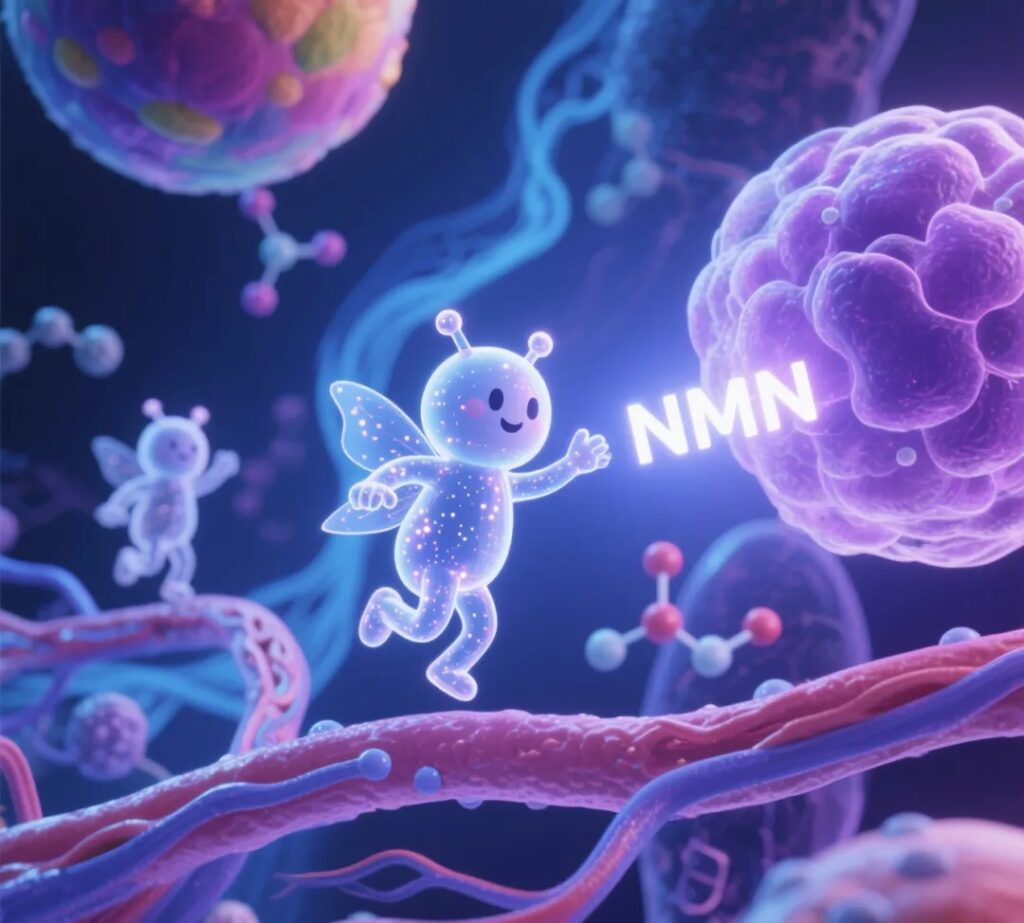
If you’ve heard people talk about NMN and thought, “Okay… but what is it actually?” You’re not alone.
NMN sounds scientific. Complicated. Maybe even a little suspicious. But the idea behind it is surprisingly simple.
Let’s break it down — no lab coat required.
First things first: NMN is not a drug
NMN stands for nicotinamide mononucleotide.
Yes, the name is long. The concept isn’t.
The most important thing to know is this:
NMN is a naturally occurring molecule that already exists in your body.
Your body uses NMN every day as part of its normal biology. It’s not a hormone. It’s not a stimulant.
And it’s not something that “forces” your body to do anything unnatural.
So what does NMN actually do?
NMN’s main job is very specific:
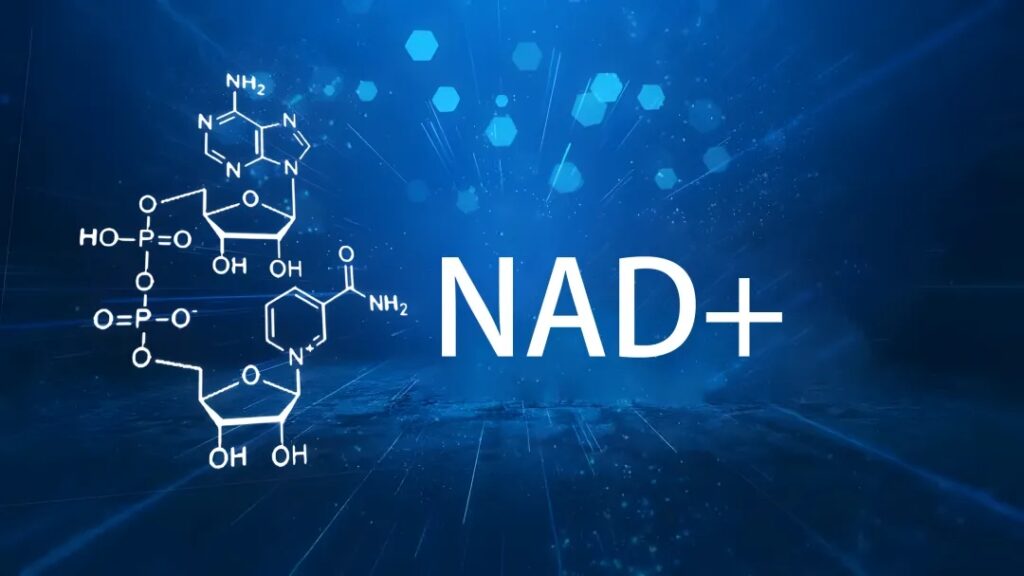
👉 It helps your body make NAD+.
And NAD+ is essential for:
- Turning food into energy
- Supporting your cells’ repair systems
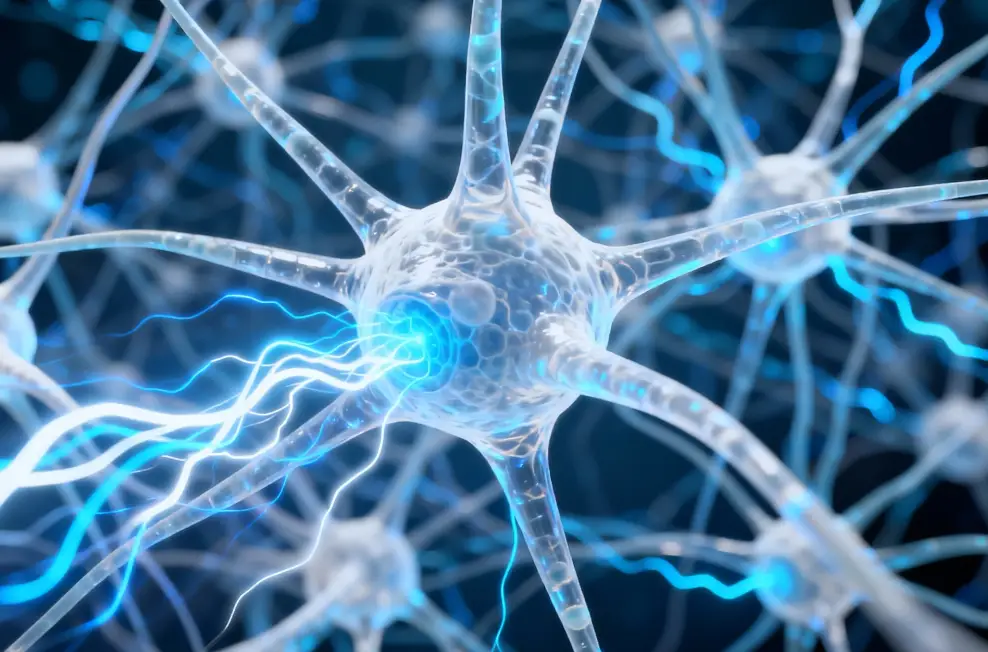
- Keeping mitochondria (your cellular “power plants”) working efficiently
Without enough NAD+, cells struggle to keep up with daily demands.
You can think of NMN as a supply material —not the energy itself, but what your body uses to make energy.
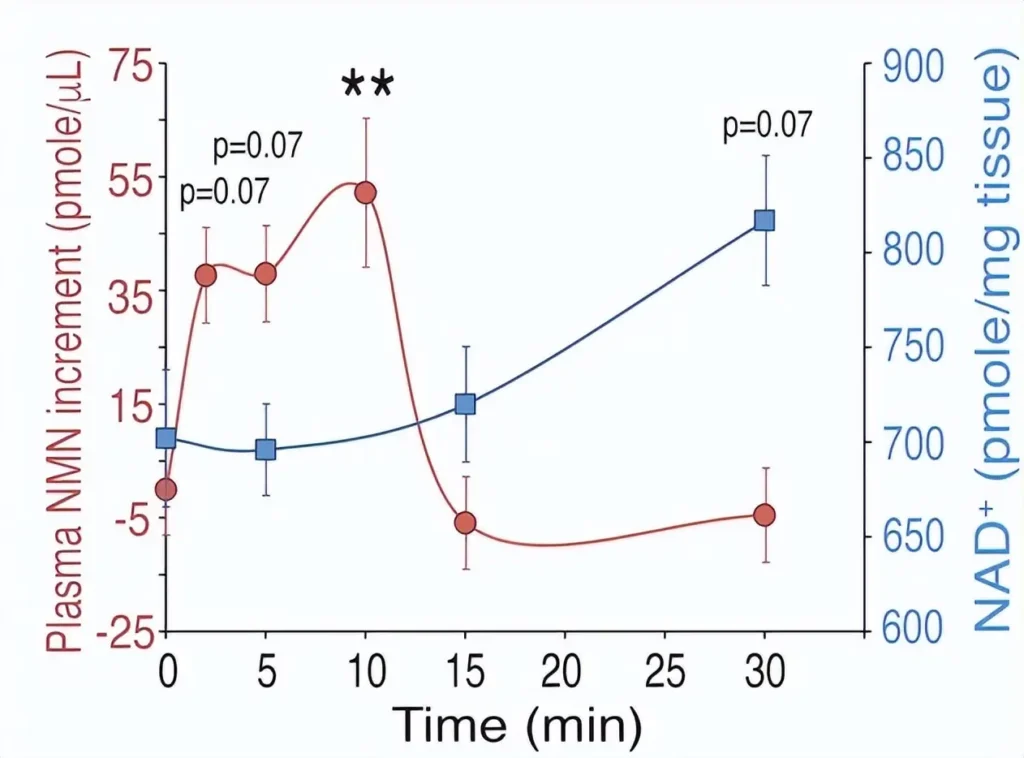
Oral NMN enters the bloodstream within 2–3 minutes, raises NMN levels in the body within 15 minutes, and can increase NAD+ levels within 30 minutes (as shown in the figure).
A simple analogy (because it helps)
Imagine your body is a city.
- NAD+ is the electricity that keeps everything running
- Cells are the buildings
- NMN is the raw material used to generate power
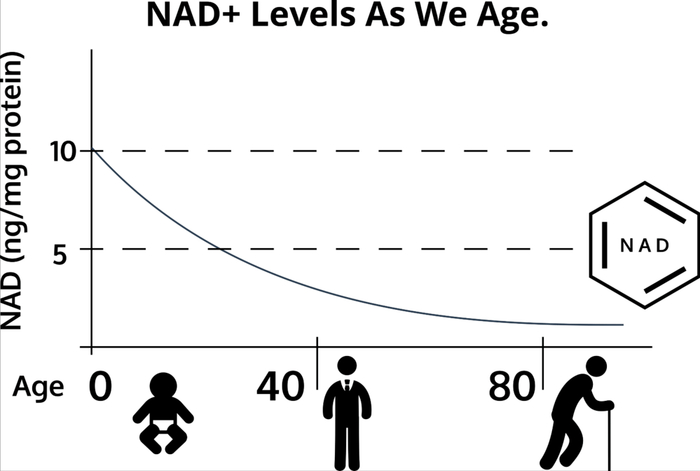
When you’re younger, your body produces NMN efficiently.As time passes, that production slows down.
Less NMN → less NAD+ → lower cellular energy
The city still works — just not as smoothly as before.
Where does NMN come from?
Your body makes NMN on its own. You also get small amounts from food, such as:
- Broccoli
- Cabbage
- Avocados
- Edamame
But here’s the key point:
The amount of NMN from food is very small compared to what your cells use daily.
That’s why scientists started studying NMN more closely — not because it’s exotic, but because it’s fundamental.
Why does NMN decline with age?
As we age, several things happen at the cellular level:
- Enzymes that produce NMN become less active
- Cellular stress increases
- NAD+ is used up faster for repair and maintenance
Over time, your body struggles to keep NAD+ levels where they used to be.
This is why researchers often describe aging not just as “getting older,” but as a gradual loss of cellular efficiency.
What NMN is not
There’s a lot of confusion online, so let’s clear this up.
NMN is not:
❌ A miracle anti-aging cure
❌ A replacement for sleep, diet, or exercise
❌ A substance that instantly boosts energy like caffeine
NMN works quietly, in the background, supporting processes your body already has.
Why people are interested in NMN
People don’t get curious about NMN because they want to live forever.
They get curious because they notice things like:
- “I get tired more easily than I used to.”
- “My recovery feels slower.”
- “I don’t feel sick — just not at my best.”
NMN entered the conversation because it connects these everyday experiences to how cells produce and manage energy.
So… should you care about NMN?
You don’t need to take NMN to understand it.
But learning what NMN is helps you see aging differently —not as something sudden or dramatic, but as a slow shift in how efficiently your body operates at the cellular level.
And once you understand that, many other conversations about energy, metabolism, and longevity start to make a lot more sense.