Lately, if you’ve been scrolling through TikTok, wellness blogs, or health forums, you’ve probably seen two acronyms popping up everywhere: NMN and NAD+. Many people confuse them, or even think they’re the same thing. But they’re not. Understanding the difference can help you make smarter choices about energy, aging, and overall health. Let’s break it down in plain, simple language.
What Is NAD+? – Your Body’s “Tiny Battery”
First, let’s talk about NAD+. Its full name is Nicotinamide Adenine Dinucleotide—a mouthful, I know. But what really matters is what it does.
Think of NAD+ as a tiny battery inside every cell of your body. It powers your cells and keeps everything running smoothly. Its main jobs are:
- Producing energy: NAD+ helps turn the food you eat—carbs, fats, proteins—into ATP, the energy your cells actually use.
- Repairing DNA: Your DNA gets tiny damages every day—from sun exposure, pollution, stress, or just aging. NAD+ activates repair proteins that fix these damages, keeping your cells healthy.
- Supporting longevity: NAD+ activates proteins called sirtuins, which help regulate metabolism, maintain mitochondrial health, and even delay certain signs of aging.
Here’s the catch: NAD+ levels naturally decline as we age, often starting in our 30s. Lower NAD+ can mean less energy, slower metabolism, and faster cellular aging.
What Is NMN? – The Building Block of NAD+
Now, what about NMN? Its full name is Nicotinamide Mononucleotide. NMN is a precursor to NAD+, meaning it’s one of the raw materials your body uses to make NAD+.
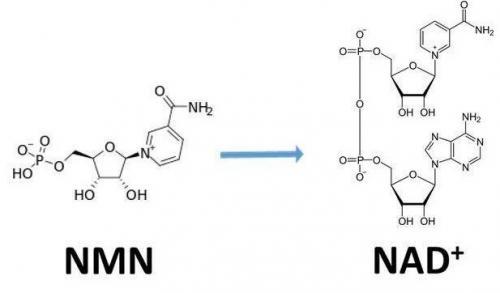
If NAD+ is the engine, NMN is the fuel. Without NMN, your body can’t make enough NAD+.
Here’s how it works when you take NMN:
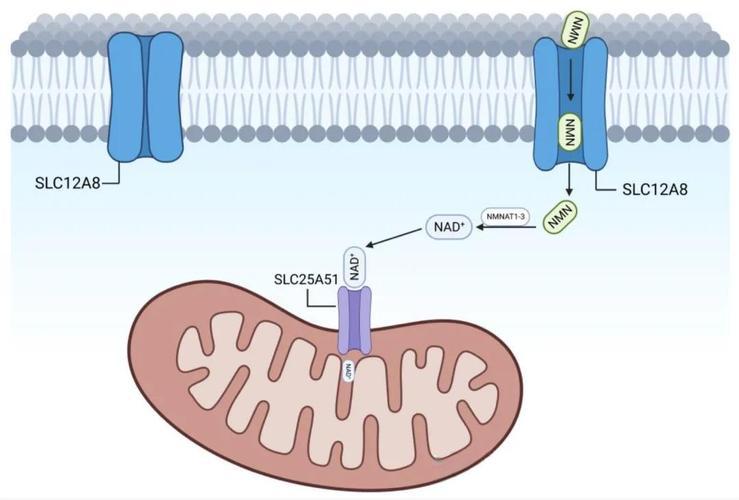
- NMN enters your bloodstream.
- Your cells convert NMN into NAD+.
- Higher NAD+ levels support energy production, DNA repair, and overall cellular health.
In short, NMN doesn’t directly power your cells—it helps your body make the molecule that does: NAD+.
NMN vs NAD+: Side-by-Side
To make it super clear, here’s a simple comparison:
| Feature | NMN | NAD+ |
| Type | Precursor molecule | Active coenzyme |
| Function | Converts into NAD+ | Powers cellular processes |
| Supplementation | Boosts NAD+ indirectly | Rarely taken directly (unstable in digestive system) |
| Availability | Found in certain foods & supplements | Produced in the body from NMN and NR |
Think of it this way: NMN is the ingredient, NAD+ is the final dish. You need the ingredient to make the dish, but the dish is what actually gives you energy.
Why It Matters
So why should you care about NMN and NAD+? Because boosting NAD+ levels can impact your energy, metabolism, and aging.
- Energy and metabolism: More NAD+ means your mitochondria—the “powerhouses” of your cells—work better, giving you more energy and improving metabolic health.
- Anti-aging effects: NAD+ activates sirtuins, which are linked to DNA repair, inflammation control, and cellular longevity.
- Brain and cognitive health: NAD+ supports neurons and may help protect against age-related cognitive decline.
Direct NAD+ supplements aren’t very practical because NAD+ breaks down quickly in your digestive system, so taking NMN is a more effective way to boost your NAD+ naturally.
NMN in Everyday Life
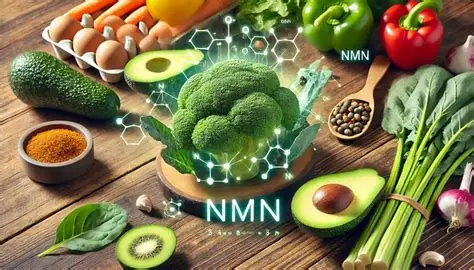
NMN isn’t just a supplement. You can get small amounts from foods like:
- Broccoli
- Avocado
- Cabbage
- Edamame
- Cucumbers
The challenge? Food alone usually doesn’t provide enough NMN to make a significant impact on NAD+ levels. That’s why many people turn to NMN supplements if they want to see noticeable benefits.
How Much NMN Should You Take?
Scientific research on NMN dosing is still evolving. Studies in humans have used doses ranging from 250 mg to 500 mg per day, and some trials go higher. Most experts recommend starting with a lower dose and gradually increasing, while monitoring how your body responds.
Tip: Always consult a healthcare professional before starting any new supplement, especially if you have underlying health conditions or take medications.
Common Misconceptions
- “NAD+ and NMN are the same.” – Wrong. NMN is a precursor; NAD+ is the active molecule that powers your cells.
- “Taking NAD+ directly works better.” – Usually false. NAD+ is unstable and poorly absorbed when taken orally. NMN or NR (another NAD+ precursor) are more effective.
- “Food alone can boost NAD+ enough.” – Partially true. Foods contain NMN, but the amounts are often too small to significantly increase NAD+ levels.
The Bottom Line
- NAD+ is the essential coenzyme that powers your cells.
- NMN is a precursor that helps your body produce more NAD+.
- Boosting NAD+ through NMN can improve energy, support metabolism, aid DNA repair, and contribute to healthy aging.
Think of NMN as the fuel, and NAD+ as the engine. Without fuel, your engine can’t run efficiently. Understanding the difference helps you make smarter decisions for your health, energy, and longevity.
Whether you’re looking to feel more energetic, support your brain, or explore anti-aging strategies, knowing the NMN vs NAD+ difference is the first step.