
As interest in NMN continues to grow, a common question comes up again and again:
“Can I get NMN naturally from food?”
The short answer is: yes — but only in very small amounts. The longer, more interesting answer explains why NMN from food plays a role, yet often isn’t enough to fully support the body’s daily cellular needs.
Let’s break it down in a simple, realistic way.
First, a quick reminder: what is NMN?
NMN (nicotinamide mononucleotide) is a naturally occurring molecule that your body uses to produce NAD+, a key coenzyme involved in:
- Cellular energy production
- Metabolism
- DNA repair
- Mitochondrial function
Your body makes NMN on its own, but this process becomes less efficient with age. That’s why researchers began studying both dietary sources of NMN and supplemental NMN.
Natural foods that contain NMN
NMN is not an artificial compound. It exists naturally in small quantities in a variety of plant-based foods — especially vegetables.
Below are some of the most commonly cited natural sources.
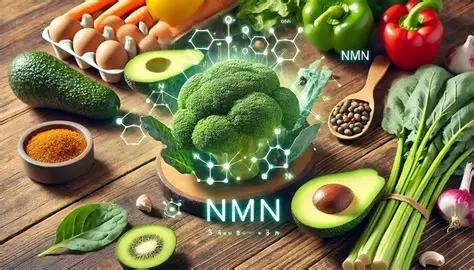
1. Broccoli
Broccoli is often mentioned at the top of the list when it comes to NMN-containing foods.
In addition to NMN, broccoli provides:
- Fiber
- Vitamin C
- Sulforaphane (a compound linked to cellular protection)
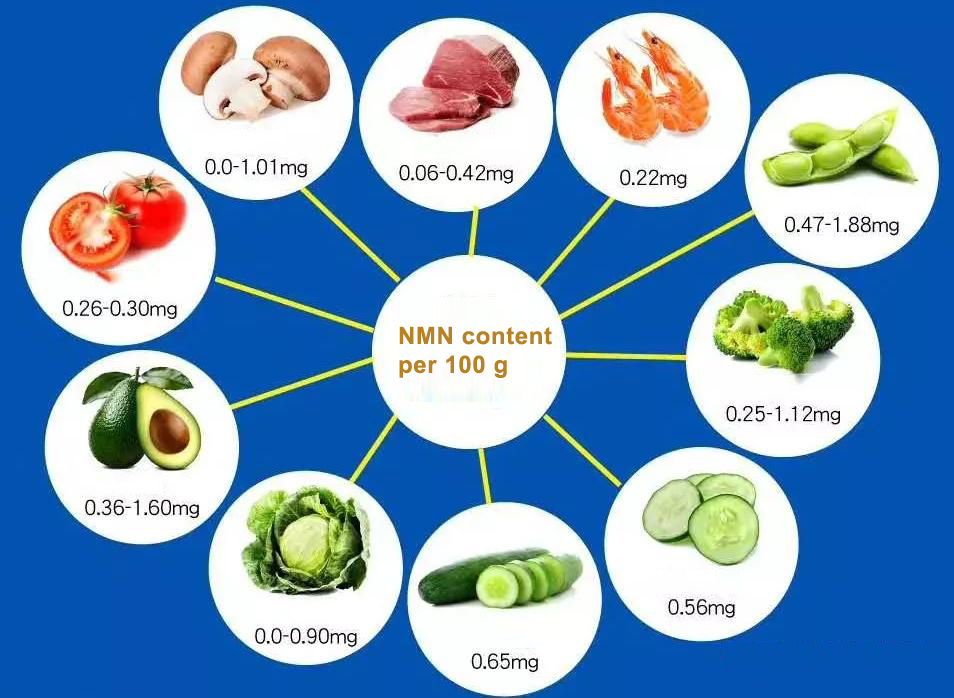
While broccoli does contain NMN, the amount is still quite low — measured in micrograms per gram, not milligrams.
2. Cabbage
Both green and purple cabbage contain trace amounts of NMN.
Cabbage is also rich in:
- Antioxidants
- Vitamin K
- Compounds that support gut health
It’s a nutritious vegetable with many benefits, but NMN content remains modest.
3. Edamame (young soybeans)
Edamame is another plant-based food shown to contain NMN.
It’s also a good source of:
- Plant protein
- Folate
- Fiber
For people following a plant-forward diet, edamame can contribute small amounts of NMN along with broader nutritional
value.
4. Avocados
Avocados contain trace levels of NMN and are well known for their healthy fats.
They also provide:
- Potassium
- Monounsaturated fats
- Support for metabolic health
Again, the NMN content is present — but minimal.
5. Cucumbers
Cucumbers are sometimes overlooked, but they do contain small amounts of NMN, especially in the seeds and skin.
While refreshing and hydrating, cucumbers contribute only tiny quantities of NMN.
6. Tomatoes
Tomatoes contain NMN along with lycopene, a powerful antioxidant.
They support:
- Cardiovascular health
- Cellular protection
However, like other foods on this list, NMN levels remain very low.
Why NMN from food is limited
Here’s the key point that often gets missed:
The amount of NMN found in food is extremely small compared to how much your cells use every day.
Even with a diet rich in vegetables, the total NMN intake from food typically reaches only microgram levels per day.
In contrast, cellular processes that depend on NAD+ operate continuously, in every tissue, all day long.
To put it simply:
- Food provides trace support
- Cellular energy systems have much higher demands
This gap becomes more noticeable with age, as the body’s ability to synthesize NMN internally declines.
Can you just eat more NMN-rich foods?
Eating a healthy, plant-rich diet is absolutely beneficial — and recommended.
However, increasing NMN intake through food alone faces practical limits:
- You would need unrealistically large quantities of vegetables
- NMN levels vary by food freshness and preparation
- Digestion and absorption further reduce availability
In real-world terms, food-based NMN supports overall health, but it does not significantly raise NAD+ levels on its own.
Why people consider NMN supplements
This is where NMN supplements enter the conversation — not as a replacement for diet, but as a complement.
Supplemental NMN provides:
- A concentrated and consistent amount
- Support for NAD+ production without relying solely on declining internal synthesis
- A practical way to bridge the gap between dietary intake and cellular demand
Importantly, NMN supplements are designed to support normal biological pathways — not override them.
Food + supplements: a balanced approach
Rather than choosing one or the other, many people view NMN through a combined lens:
- Food supports overall nutrition and metabolic health
- NMN supplementation supports specific cellular energy pathways
This approach aligns with how modern nutrition is often practiced — foundational habits first, targeted support second.
What this doesn’t mean
It’s important to be clear:
- NMN supplements are not a substitute for healthy eating
- They don’t cancel out poor lifestyle habits
- They are not magic anti-aging solutions
They are simply one tool — grounded in biology — that helps support a system that naturally declines with age.
The takeaway
Yes, NMN exists naturally in foods like broccoli, cabbage, edamame, avocados, and tomatoes.
But the reality is:
Dietary NMN intake is far below the amount your cells use each day.
That’s why many people choose to maintain a healthy diet while also supplementing NMN appropriately, especially as they get older or feel the effects of declining cellular energy.
Understanding this balance helps move the conversation away from hype — and toward informed, realistic choices about long-term health and vitality.